
The value of clarity upfront
I ducked into Big W recently to buy a pair of slippers.
That was the plan.
One item.
Very little time.
If you’ve ever walked into a large store on a mission, you’ll know the risk:
what should be a five-minute job can quietly turn into a 40-minute wander.
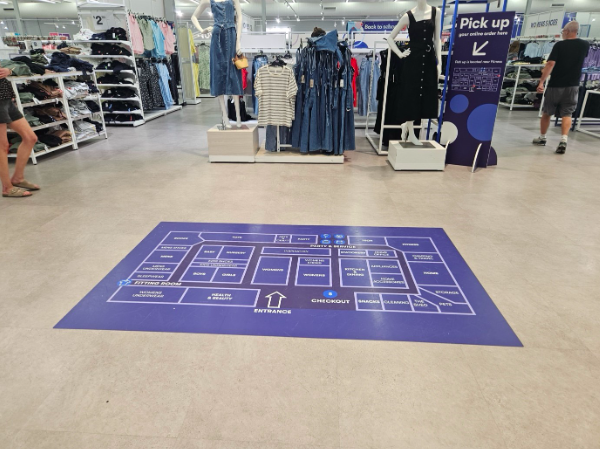
As I walked in, I looked down, and there it was.
A large map of the entire store, printed on the floor right at the entrance.
Shoes here.
Homewares there.
Checkout over there.
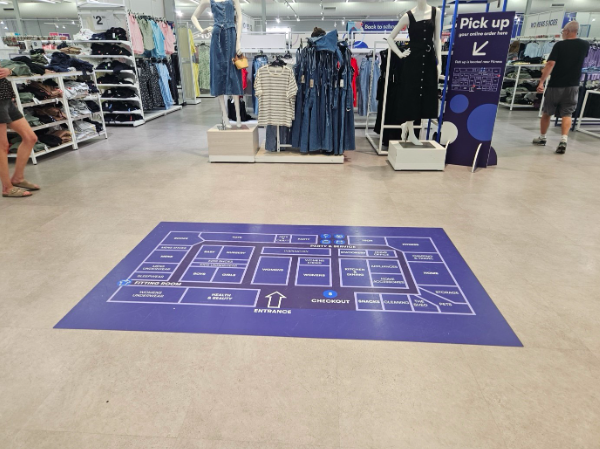
I hadn’t even started shopping yet, and already I felt calmer, more focused and oddly optimistic about my chances of getting in and out on time.
Same store. Same size.
But now I had orientation.
Why that floor map works
That map doesn’t reduce the complexity of the store.
It simply helps you navigate it.
It helps you:
Reduce cognitive load
Create a sense of control
Set expectations
Speed up decision-making
You know where you’re going, even if you change your mind later.
And this is where communication comes in.
Conversations work the same way
Too many conversations start without a ‘map’:
Someone launches straight into detail.
Or starts halfway through their thinking.
Or circles the issue before ever naming it.
The listener is left mentally wandering the aisles:
What’s the point?
Where is this going?
How much attention do I need to give this?
This is the recipe for confusion, and cognitive overload.
When people don’t know the shape of what’s coming, they struggle to follow, even if the content is good.
Signposting is conversational orientation
Strong communicators do what that store map does.
They signpost.
They say things like:
“There are three things I want to cover today.”
“I’ll give you the context first, then the recommendation.”
“This will take about five minutes.”
“I want to talk about the what, the why, and the so what.”
You’re helping people locate themselves in the conversation.
Clarity up front accelerates outcomes
When you signpost:
People relax — they know what’s expected
They listen more accurately — not defensively
They can track progress — we’ve done point one, here’s point two
You get to the outcome faster
You spend less time clarifying and more time deciding.
Just like I spent less time wandering and more time finding the slippers.
The irony?
Most people skip signposting because they think it sounds basic.
It’s not basic.
It’s generous.
It says:
“I care enough about your attention to make this easy to follow.”
One simple question to ask yourself
Before your next meeting, presentation or difficult conversation, ask:
If this were a store, would people know where they are and where they’re heading?
If the answer is no, start with the map. Clarity up front is about bringing people with you. And it’s also the fast track to engagement and attention and moving the conversations forward.
And yes, I got the slippers (and an excellent metaphor) and made it out on time.
Want a short, sharp online course to tighten up your comms?
Check out my effective communication training program here: https://anneliblundell.com/digital-learning-academy