
How to keep engagement high online
Wandering through the charming gold-rush village of Arrowtown in New Zealand, I stumbled on a brilliant little engagement hack. And no, it wasn’t in some fancy innovation hub. It was in the town museum.
Now, museums are wonderful… if you’re into history. Kids, however, often are not.
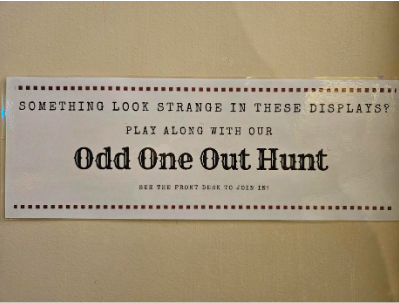
Enter: The Odd One Out Hunt.
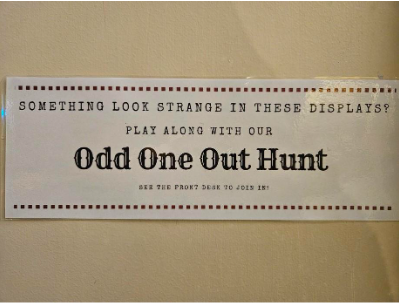
Each historical display had one sneaky, delightfully wrong item placed inside it.
Picture this:
A brand-new Nike sneaker sitting proudly among century-old leather booths

A My Little Pony toy nestled in with horse-and-cart gear like it owns the place

The kids lost their minds.
They raced from cabinet to cabinet, determined to spot what didn’t belong. Suddenly, dusty history became an adventure.
So, what on earth does this have to do with your online meetings?
Everything. Absolutely everything.
Because, Arrowtown Museum cracked the code for human engagement.
They used three simple principles that every leader, facilitator and meeting host should be obsessed with:
1. Break the monotony before it breaks you
Our brains love patterns… until they get bored.
Online meetings are the land of predictable patterns: same structure, same format, same people dominating, same screens, same everything.
Your job? Interrupt the pattern.
Just one surprising or curious element snaps people back to attention.
Ask something unexpected at the start.
Use a creative prompt.
Throw in a visual clue or an odd image.
Give them something new for their brains to chew on.
If Arrowtown can spice up a cabinet of old boots, you can definitely spice up a project update.
2. Add novelty and surprise — the good kind
Novelty triggers dopamine. Dopamine triggers attention. Attention triggers engagement.
The museum didn’t overhaul the entire exhibit; they just added one surprising twist.
Same display. New energy.
You can do the same:
Introduce a new way of capturing ideas.
Run a mini-poll where the least expected answer wins.
Let someone else open the meeting with a two-minute thought starter.
Bring in a curious question like: “What’s the odd thing that doesn’t belong in our current process?”
Small changes, big wake-up calls.
3. Give people a role to play (humans love a mission)
Kids weren’t just looking at the displays — they were on a quest.
Their job was to find the odd one out.
Adults aren’t much different.
Give people a clear role and engagement skyrockets.
Try things like:
“Your job today is to count how many times we mention the customer.”
“Someone be our ‘jargon hunter’ — call out any buzzword that sneaks in.”
“One person watches for when energy drops and calls a reset.”
“Someone track when we drift off topic — and pull us back!”
Meetings become participatory instead of passive.
People stay alert because they’re enlisted.
The real lesson? Engagement isn’t accidental. It’s engineered.
Arrowtown teaches us this beautifully:
People don’t need more information.
They need invitation — to participate, to play, to notice, to contribute.
Next time you’re running an online meeting, ask yourself:
What’s the odd one out I can add today?
What tiny twist would make this meeting 10 per cent more interesting?
And how can I give people a mission, not just a meeting?
Because if a tiny museum in rural New Zealand can turn dusty history into a dopamine hit, you can absolutely rescue your online meetings from the land of glazed-over eyeballs.
And frankly, why wouldn’t you?
