
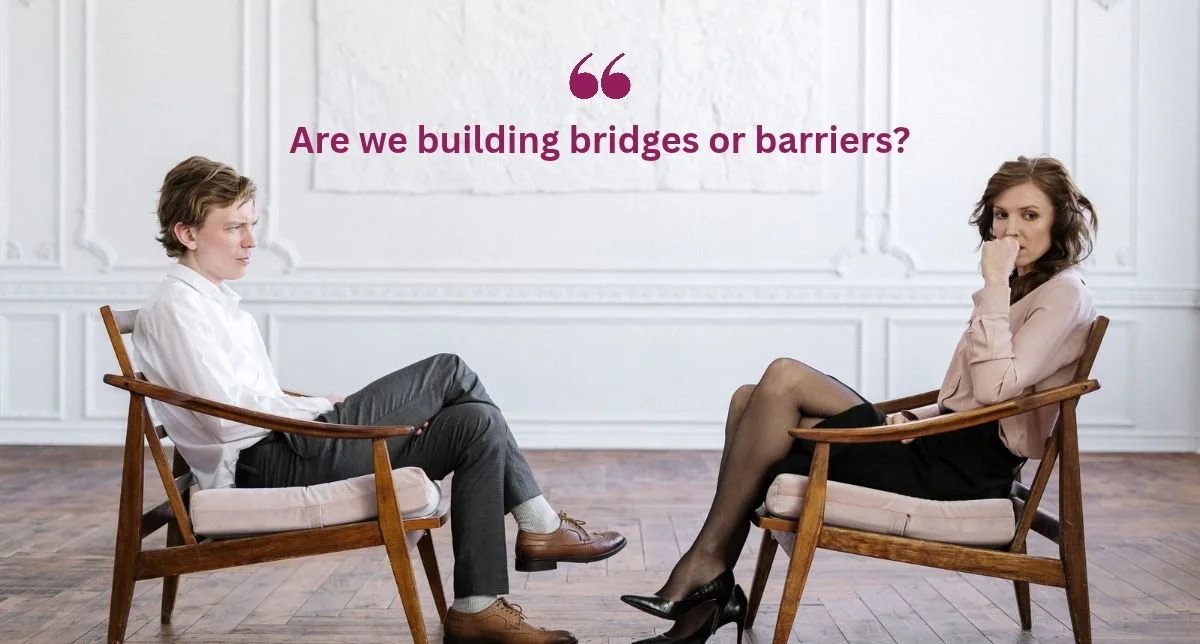
How to accidentally shut down a conversation
The other day, I was in conversation with a colleague. I offered a suggestion, and without skipping a beat he replied: “No, that won’t work - we’ve tried it before.”
I felt an immediate jolt of defensiveness. My shoulders tensed, and I noticed myself pulling back. Suddenly, I felt a little less inclined to offer another idea, a little less invested in the conversation.
And I know this person! I know he didn’t mean it that way. He wasn’t trying to dismiss me or shut me down. But that’s exactly how it felt in my body.
I started to wonder about the many voices we unintentionally silence every day, because of the way our words come across? How many good ideas, contributions, or perspectives never see the light of day because of a throwaway phrase that creates distance instead of connection?
Especially if we DO in fact disagree, or think differently, or don't want to take that action. How can we still be true to ourselves and our opinions, without putting people offside?
Words matter. They can open doors, build trust, and create connection, or they can slam those doors shut and leave people feeling defensive, dismissed, or devalued. We need to remember that small language shifts can make a huge difference in how your message lands.
Here are ten common disconnecting phrases (and what to say instead if you want to build bridges, not walls).
1. “That’s not what I said.”
Why it disconnects: Feels accusatory, suggests poor listening.
Say instead: “Let me clarify what I meant—I might not have explained it clearly.”
2. “You’re overreacting.”
Why it disconnects: Belittles feelings, shuts down openness.
Say instead: “I can see this is having a big impact—tell me more about what’s behind it.”
3. “We’ve always done it this way.”
Why it disconnects: Signals resistance, blocks innovation.
Say instead: “Here’s what’s worked in the past—how might we build on that for this situation?”
4. “You don’t understand.”
Why it disconnects: Implies incompetence and creates defensiveness.
Say instead: “I might not have explained that clearly—let me try another way.”
5. “No offence, but…”
Why it disconnects: Spoiler: offence will be taken.
Say instead: “May I share an observation?” or “Can I offer a different perspective?”
6. “That won’t work.”
Why it disconnects: Shuts ideas down before they’ve been explored.
Say instead: “Interesting. I see where you’re going with this. I’m wondering what the obstacles might be to this approach."
7. “Calm down.”
Why it disconnects: It sounds patronising and dismisses emotions.
Say instead: “I can see this is important to you—let’s take a breath and work through it together.”
8. “You’re wrong.”
Why it disconnects: A direct attack that breeds defensiveness.
Say instead: “Hmm, I have a different view. Can I share my thinking?”
9. “I don’t agree.”
Why it disconnects: Puts the other person instantly on the defensive.
Say instead: “I see it a bit differently—can I share my perspective?”
10. “Don’t take it personally.”
Why it disconnects: Minimises impact of the words.
Say instead: “I know this might feel personal—here’s what I mean, and I’d like your input."
Final thought
What struck me in that moment with my colleague was how quickly I disengaged, and not because of intent, but because of impact. And if I can feel that way, when I live and breathe communication dynamics for a living, imagine how often this happens quietly across our workplaces.
Leadership and influence aren’t just about what you say, they’re about how you say it. By making these small shifts in language, you’re not “going soft,” you’re going smart. You’re signalling respect, inviting collaboration, and building trust.
And if I can feel that way, when I live and breathe communication dynamics for a living, imagine how often this happens quietly across our workplaces, for people who don't live and breathe communication effectiveness for a living.